

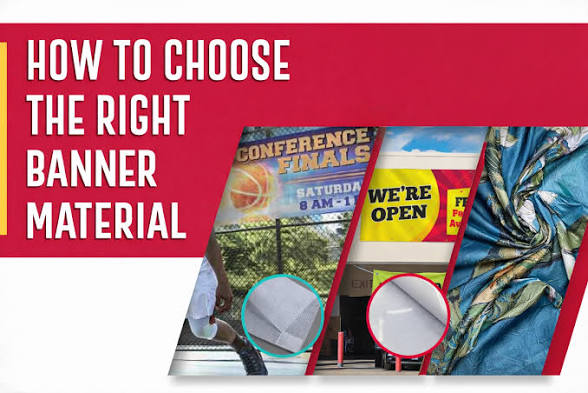
Outdoor advertising offers exceptional visibility for businesses, community events, and promotional campaigns. However, displaying signage outdoors means subjecting it to an unpredictable mix of environmental factors, including heavy rain, relentless ultraviolet rays, temperature fluctuations, and powerful wind gusts. If you select the wrong substrate, your display can quickly fade, tear, or deteriorate, leaving a poor impression of your brand.
Selecting the right material requires evaluating the balance between strength, flexibility, visual clarity, and atmospheric resilience. For most commercial campaigns, investing in durable outdoor vinyl PVC banners provides the necessary structural integrity and waterproof performance needed to withstand severe weather conditions. Understanding the characteristics of different banner substrates ensures your investment remains eye-catching and intact throughout its planned display lifecycle.
Key Factors That Influence Banner Durability
To make an informed choice, you must first evaluate the specific environmental conditions and practical requirements of your display location.
Material Composition and Weight
Banner weight is typically measured in grams per square metre (gsm). A higher gsm generally indicates a denser, stronger fabric capable of enduring extended exposure. Standard outdoor frontlit banners often range between 440gsm and 510gsm, offering an excellent balance of rip resistance, print quality, and cost efficiency. Lightweight materials may work well for temporary weekend events, but long-term displays require heavier commercial grades.
Weather and UV Resistance
Sunlight is one of the most destructive elements for outdoor graphics. Extended exposure to ultraviolet radiation can cause low-grade inks to fade and cheap plastics to become brittle and crack. Selecting materials coated for UV protection alongside fade-resistant solvent or UV-cured inks ensures that brand colours stay saturated and legible even under direct summer sun. Waterproof properties are equally essential to prevent water ingress and mould growth.
Location and Wind Exposure
Placement directly influences the mechanical stress placed on a sign. A banner mounted flush against a solid brick wall encounters far less wind resistance than one suspended between posts in an open field or mounted on high scaffolding. Solid banners can act like sails in high winds, which places immense pressure on mounting points and eyelets. In exposed or elevated environments, air-permeable materials are critical for preventing structural failure.
Intended Display Duration
Consider whether the banner serves a short-term promotion, a seasonal campaign, or a permanent outdoor fixture. Temporary event signage can utilise budget-friendly, medium-weight materials, whereas multi-year building wraps or shopfront promotions require heavy-duty reinforced substrates with reinforced hems and anti-tear reinforcement.
Evaluating Common Outdoor Banner Substrates
Different situations demand specific physical properties. Here is how the most common exterior materials perform in varied environments.
Standard Heavyweight PVC
Heavyweight PVC remains the industry benchmark for general outdoor advertising. Its non-porous surface provides vibrant colour reproduction, making text and high-resolution images stand out clearly from a distance. PVC is inherently waterproof, resistant to tearing, and capable of enduring wide temperature variations. It is ideal for retail promotions, roadside hoardings, event entrances, and construction hoardings where the material is supported by a solid backing.
Mesh PVC for High-Wind Areas
Mesh banner material features thousands of tiny perforations that allow air and sound to pass directly through the fabric. By reducing wind load by up to forty percent, mesh prevents excessive strain on fences, scaffolding, and cable fixings. It is the premier choice for exposed building wraps, sports ground perimeters, and temporary construction fencing where high winds could otherwise tear a solid banner from its fixings.
Blockout PVC for Double-Sided Visibility
When you need graphics visible from both directions without light shining through from behind, blockout PVC is the optimal solution. It contains an internal opaque carbon layer sandwiched between two printable surfaces. This prevents shadowing and ensures maximum contrast even in harsh, direct sunlight. Blockout materials are commonly used for street pole banners and hanging outdoor retail signs.
Finishing and Installation Best Practices
Choosing the right material is only half the battle; proper finishing ensures longevity. Always specify heat-welded or double-stitched hems along the perimeter to prevent edge fraying and distribute tension evenly. High-grade nickel or brass eyelets should be placed at regular intervals, typically every 500 millimetres, to secure the banner without tearing the corners.
When installing, ensure uniform tension across all fastening points using heavy-duty bungee ties or cable ties rather than rigid wire. Bungee ties provide slight elasticity, absorbing wind shocks and protecting the eyelets from sudden gusts. With the right substrate and correct installation, your outdoor signage will remain professional and vibrant through every season.
